Five Plays of Psychological Safety

Tanmay Vora
I am blogging after an unintended break of 6 weeks due to medical situations in family. Thankfully, it’s all behind me and I am slowly stepping back into the routine of reading, writing and publishing.
During these weeks, I spent a considerable amount of time in hospital environment observing how care is delivered. In an environment that most people dread, I saw stories of leadership, clarity, competence and selflessness.
I saw a patient offering a tip to the nurse while being discharged. The nurse gently smiled and returned the tip mentioning that she gets paid enough to not require tips. However, she also took a promise from the patient that the amount of tip be donated to the underprivileged on her behalf. She did not return the tip, but redirected it where it would matter more. It was fascinating to see this young woman’s concern for others. I also saw stories of busy surgeons who struck balance between their work, learning and giving back through teaching. I saw hospital administration staff, workers, janitors working round the clock to make a difference.
“Reframe work as a continuous learning process. When you do this, failure is not discouraging but motivating.” – Minette Norman and Karolin Helbig
Providing care is hard because each professional has to exercise a choice to deliver impeccable care irrespective of their personal context.
Psychlogical safety is critical in environments like these where experience or outcome is largely influenced by attitudinal and behavioral choices that individuals make.
The Five Plays of Psychological Safety
In these environments, psychological safety isn’t nice-to-have, but a driving force behind human performance. It’s how teams thrive.
In such teams, people don’t hold back their concerns, questions or ideas. They admit mistakes, challenge ideas, offer help, walk that extra mile, and speak up even when it’s hard.
Psychological safety fosters a belief that one can speak up or take risks without fear of humiliation or punishment.
I recently read The Psychological Safety Playbook by Minette Norman and Karolin Helbig and turned it into this visual summary of five simple, powerful plays.
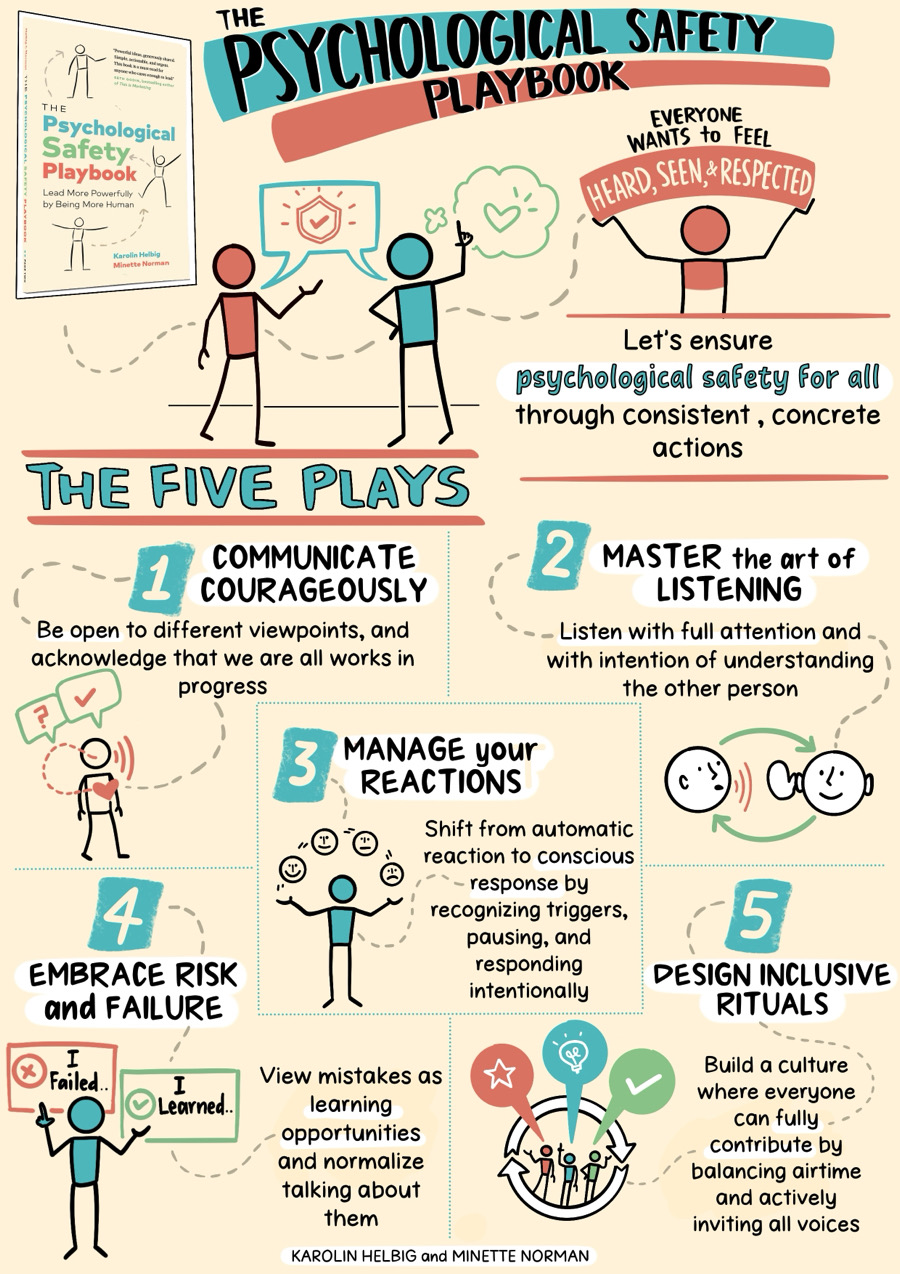
These practices apply to every leader, from startup founders to corporate executives, who want to build a safe, honest space for people to do their best work.
These are not big programs, but everyday habits. The common thread that binds these habits is the courage to be vulnerable, a commitment to learn together, genuine appreciation and focusing on human connection.
Let this be a reminder: psychological safety isn’t just about making people feel good. It’s about creating the conditions for people to do their best work together.