How to be an Essentialist?
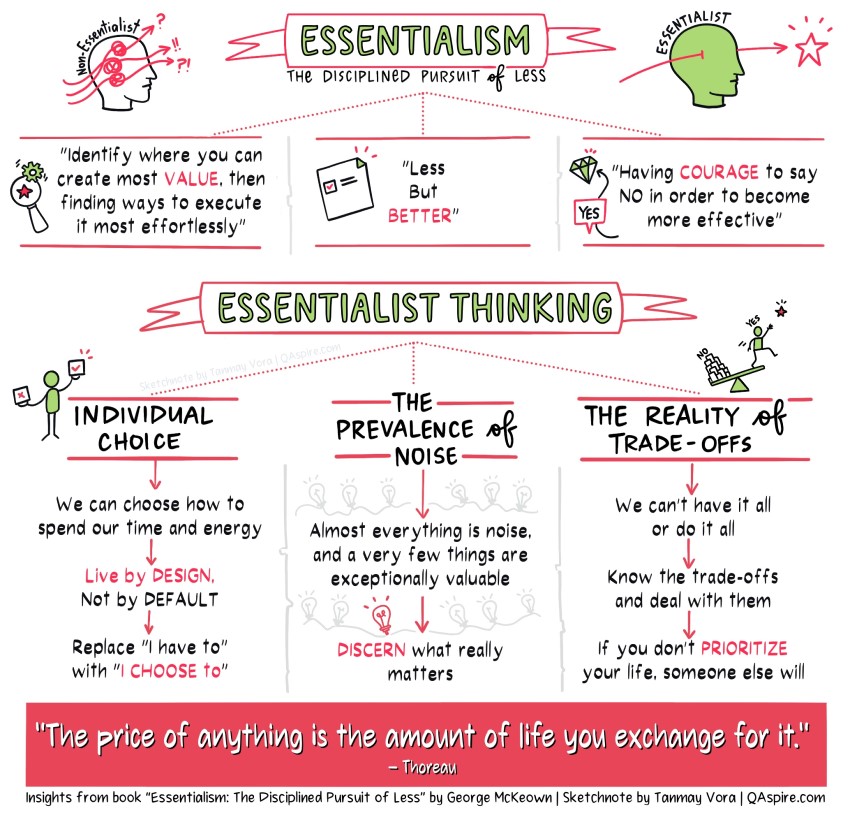
Essentialism is about identifying where you can create most VALUE , make greatest contribution or create greatest impact. It is then about finding ways, building systems and having tools that help you execute on it effortlessly. It is about doing less but doing BETTER. This also means having courage to say NO to less important things.

Tanmay Vora
Essentialism by George McKeown
When facilitating strategy discussions with customers, I often came across situations when teams commit to work on multiple critical priorities at a time. While I appreciate their aspirational intent to solve many of those plaguing problems at once, I have to request them to list Top Three priorities that they would like to address first and three actions that they can commit to within each priority. Everything else goes to the parking lot of things to be done.
The word “priority” has its roots in Latin word “prioritas” which means “first in rank, order or dignity.” We cannot have more than a few things as our top priority, even if we excel at Multi-Tasking. Disruptions, hyper-competitive landscape and the need to stay on top of the curve is pushing many organizations into a situation where overwhelming priorities lead to burn outs in the team. This has tangible negative impact on an organizational performance and outcomes.
This is true for individuals as well. We now competing priorities in areas like work, family, health, relationships, learning etc. We have a lot to do and where we often falter is trying to do it all at the same time.
I recently read George McKeown’s book titled “Essentialism: A Disciplined Pursuit of Less”. Essentialism is about identifying where you can create most VALUE , make greatest contribution or create greatest impact. It is then about finding ways, building systems and having tools that help you execute on it effortlessly. It is about doing less but doing BETTER. This also means having courage to say NO to less important things.
Being an Essentialist
100-Word Story: Choose Wisely
In a conversation about career growth, Warren Buffet once asked his personal pilot to write down his top 25 career goals. The pilot was then asked to circle five most important goals. When the pilot inquired about the remaining 20 goals, Buffet responded, “Everything you didn’t circle just became your Avoid-At-All-Cost list. No matter what, these things get no attention from you until you’ve succeeded with your top 5”.
Time is our most precious, non-renewable resource. If we are not using it wisely to make our best contribution, we may be doing a disservice to our inherent potential. Choose wisely.
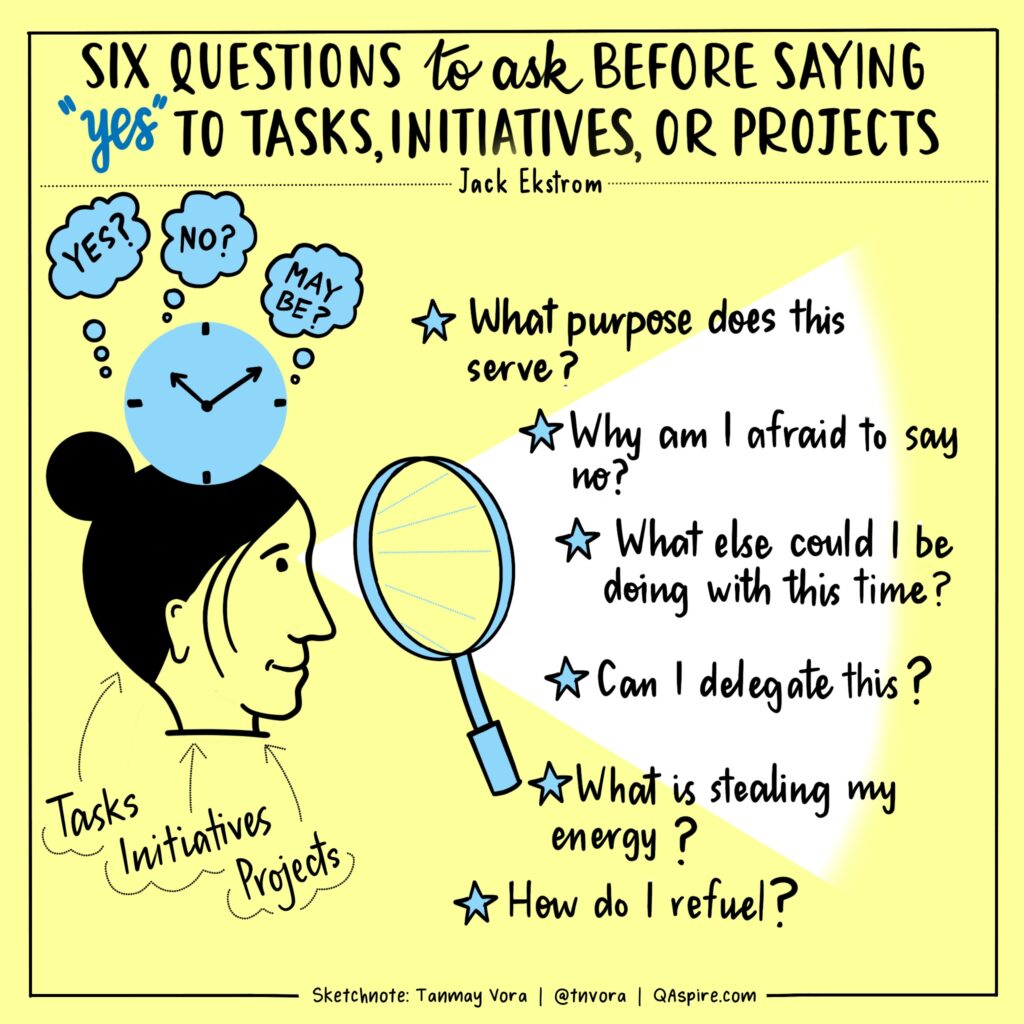
Six Questions for Prioritization