How to Create a Culture of Change Acceptance
Most change initiatives fail because of soft/human aspects of building a culture. This post illustrates six components of creating a culture of change acceptance based on a recent HBR article.

Tanmay Vora
As an organizational system grows complex, it hardens through processes, beliefs, mindsets, legacy decisions and culture.
However, most change in complex organizations is implemented with a short-term focus on results. Let’s do this differently and we get that. This plug and play approach to change may lend short-term results but organization pays the cost elsewhere in form of unsustainability of new practices, other impacts, employee morale etc.
Change in a complex system requires much more than just communicating purpose and plans of change. Leaders make a mistake of assuming that change communication will lead to alignment of people. They forget that human system (our rationale, emotions, aspirations etc.) is far more complex than any other complex system out there. Add scale of the organization, structure of teams, geographical distribution, functional barriers, remote work and disruptive waves and you have a perfect storm to face when trying to implement any meaningful change with long-term impacts.
Building a Culture of Change Acceptance
I read a recent HBR article titled “Getting Employee Buy-In for Organizational Change” by Andrea Belk Oslon with great interest. The author says,
“The most successful organizations I’ve worked with have done it by creating a culture of change acceptance, far before they intend to introduce any changes. They do this by addressing six components of culture: legitimacy, ownership, relevance, attainability, authenticity, and impartiality.”
Here are the key ideas from the article in sketchnote summary form:
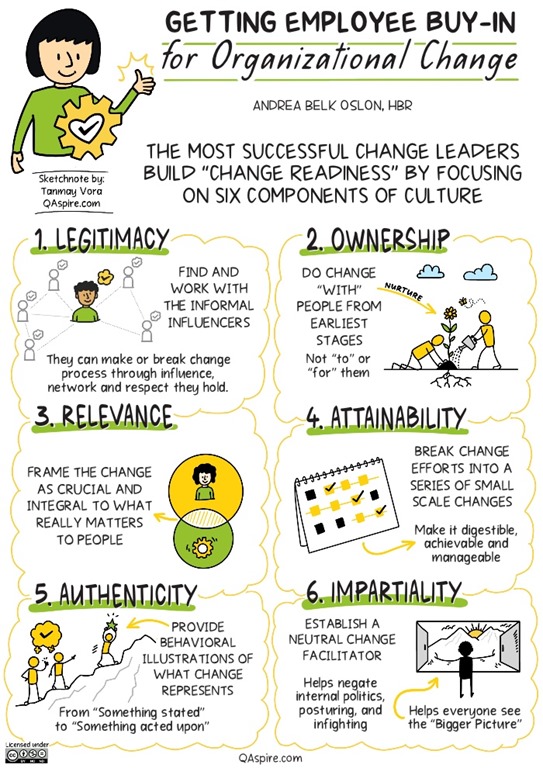
Creating any long-term, sustainable, meaningful change is much like nurturing a plant. We can’t simply throw seeds of change hoping that something will grow when we have not invested in making the soil fertile.
Organization’s culture is the soil that needs to be tilled and nurtured before anything meaningful can grow on it.
Quick Wins to Address Change Resistance
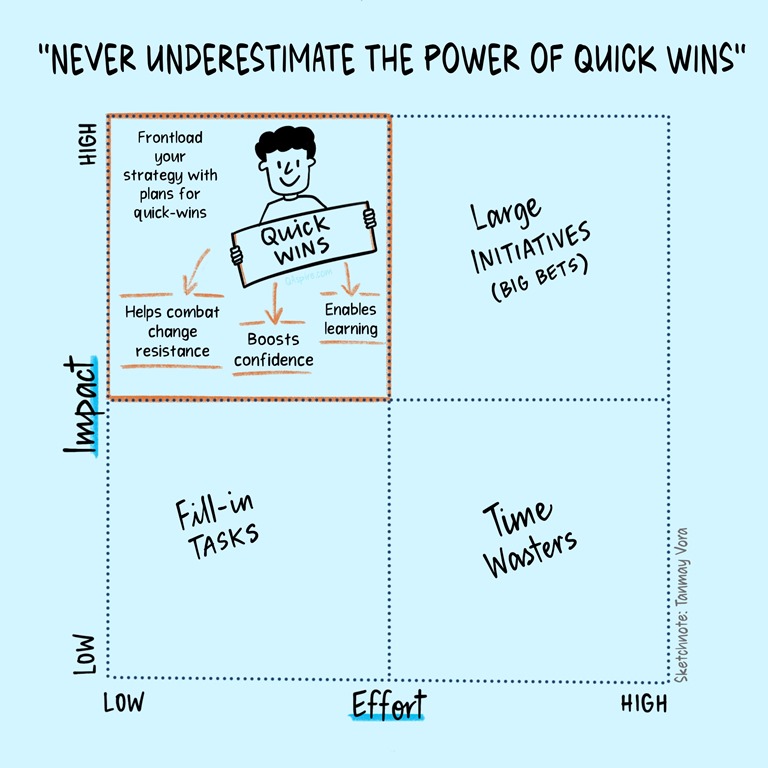
Large scale changes in complex systems often get stuck in elaborate planning cycles and long implementation timelines.When we frontload our long term plans with a strategy to implement/demonstrate quick-wins (high-impact low effort initiatives), we are able to show progress, build trust and enable learning that motivates people to improve.
Here’s quick 2×2 matrix that enables thinking around quick-wins.
Leading Change: Blast from the Past
Here are a few other posts and sketchnotes at QAspire.com that complement the conversation in this post.