How To Think Like Leonardo Da Vinci: 7 Principles
“How to Think Like Leonardo Da Vinci” by Michael Gelb offers seven key aspects of Da Vinci’s mindset that are fascinating and offers practical exercises/ideas to help us cultivate our own creativity to live up to our highest potential.

Tanmay Vora
I recently re-read the book “How to Think Like Leonardo Da Vinci” by Michael Gelb and realized how profoundly the book impacted my thinking about creativity, learning and well being back in time. The book offers really valuable ideas into the mind and works of one of the history’s greatest thinkers and my inspiration, Leonardo Da Vinci – a true Neo-Generalist.
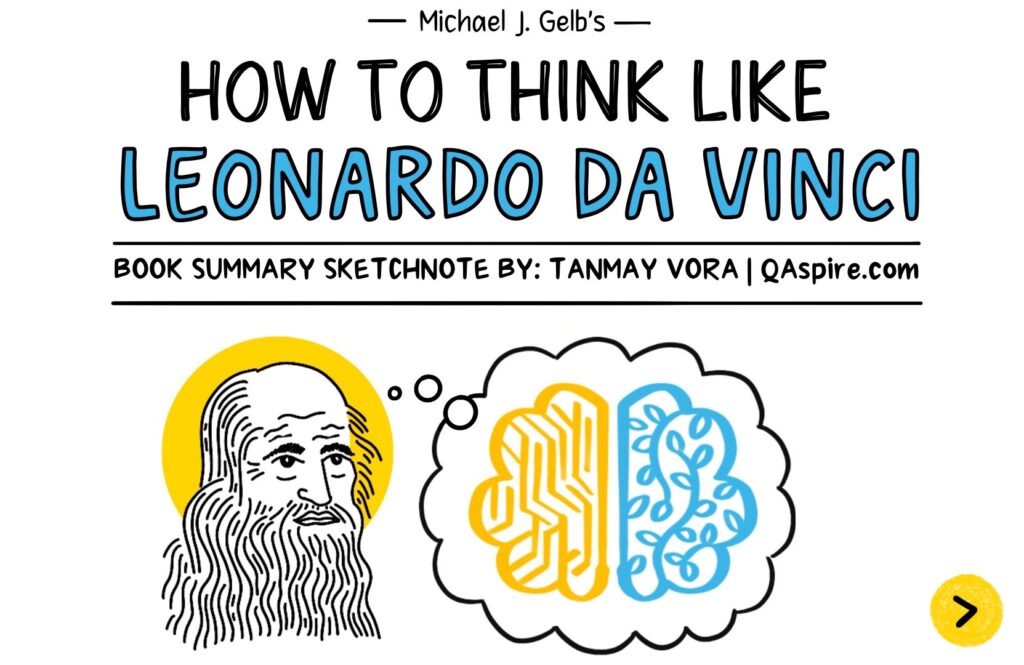
In the book, Michael Gelb has explored seven key aspects of Da Vinci’s mindset that are fascinating and offers practical exercises/ideas to help us cultivate our own creativity to live up to our highest potential.
Here are my key thoughts these 7 aspects:
1. Curiosità (An Insatiable Curiosity and Thirst for Learning)
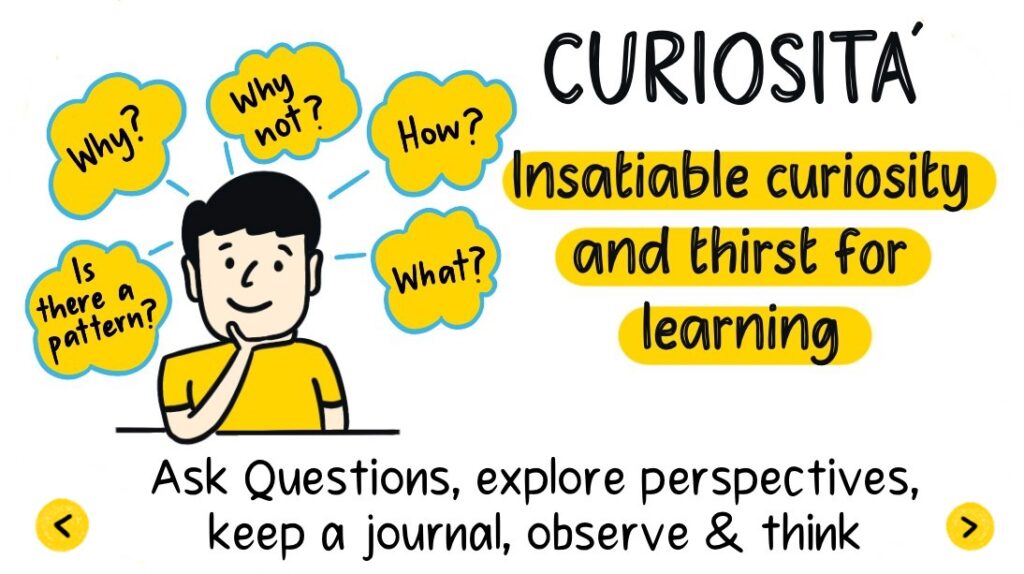
Curiosity is at the heart of learning. My own journey into self-directed learning of technology, music and drawing (amongst other things) is an outcome of a constant attitude of curiosity. It becomes even more important in an AI driven world where out ability to thrive largely depends on blending our current knowledge with emerging understanding and doing something about it. Here are a few things we can do:
- Write a journal
- Engage in continuous learning
- Ask Questions (and strive to find answers)
- Most importantly, step back and take time to reflect and contemplate. Learning = Experience + Reflection
2. Dimostrazione (Test Knowledge via Practical Experience)
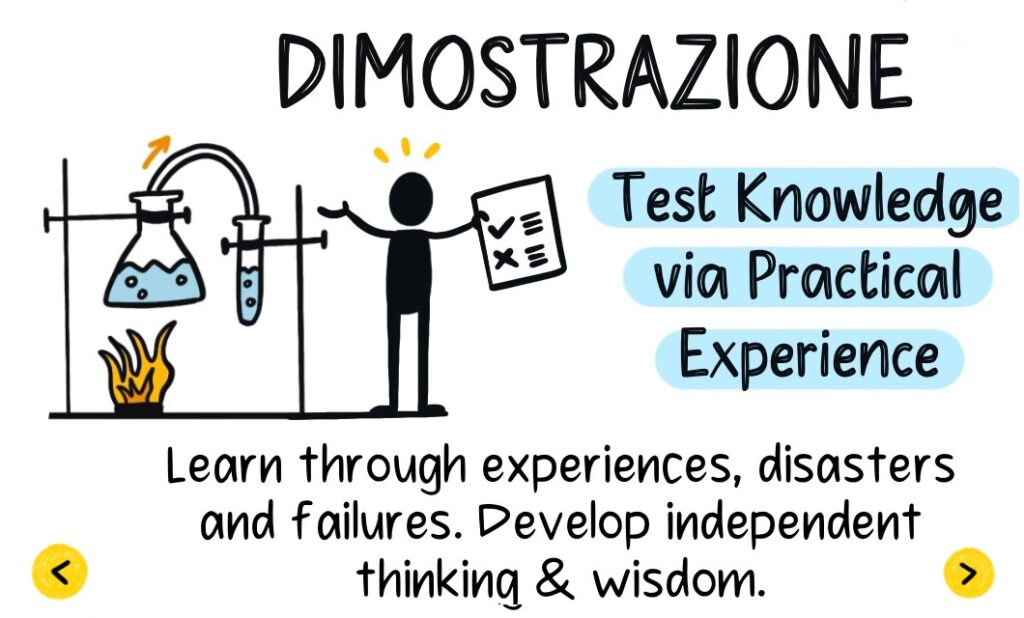
Learning happens when knowledge meets experience meets reflection. Dimostrazione means demonstration of knowledge through experiments, learning from our failures and reapplying our new found understanding to make something tangible work. The best learning happens in the flow of work. Experiential learning, experimentation and failing fast forward is at the heart of self-directed learning. When we apply what we learn in our unique contexts using our unique methods, we build new knowledge and wisdom.
3. Sensazione (Constantly Sharpen the Senses)
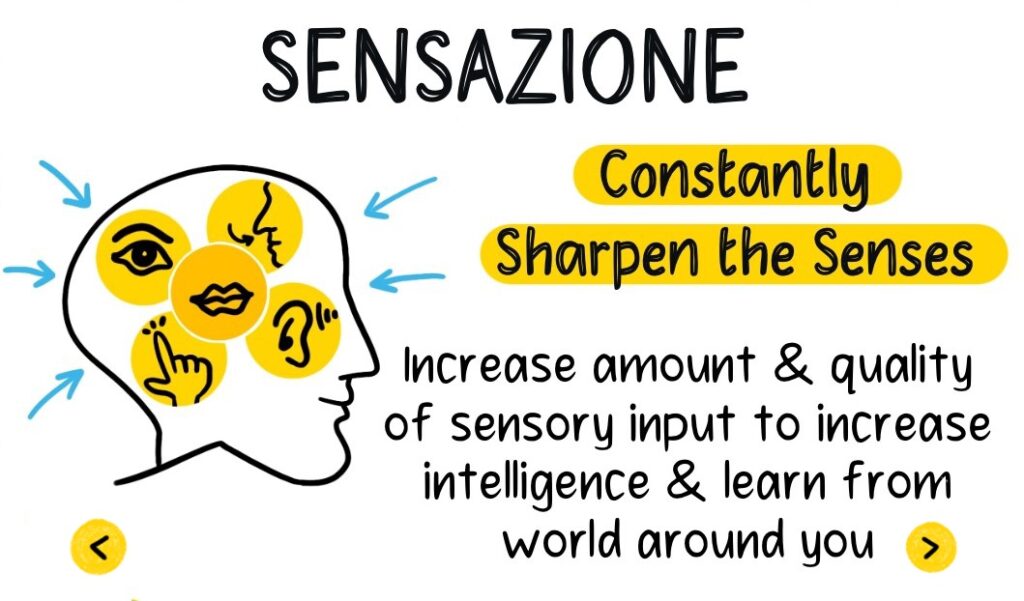
Our understanding of the world largely depends on how deeply we observe and perceive it. This requires developing our sensory awareness and paying close attention to sights, sounds, smells, tastes and touch. It also requires us to invest in developing mindfulness as a tool to sharpen our senses. We absorb what we observe and we live according to what we absorb.
4. Sfumato (Being Comfortable with Ambiguity)
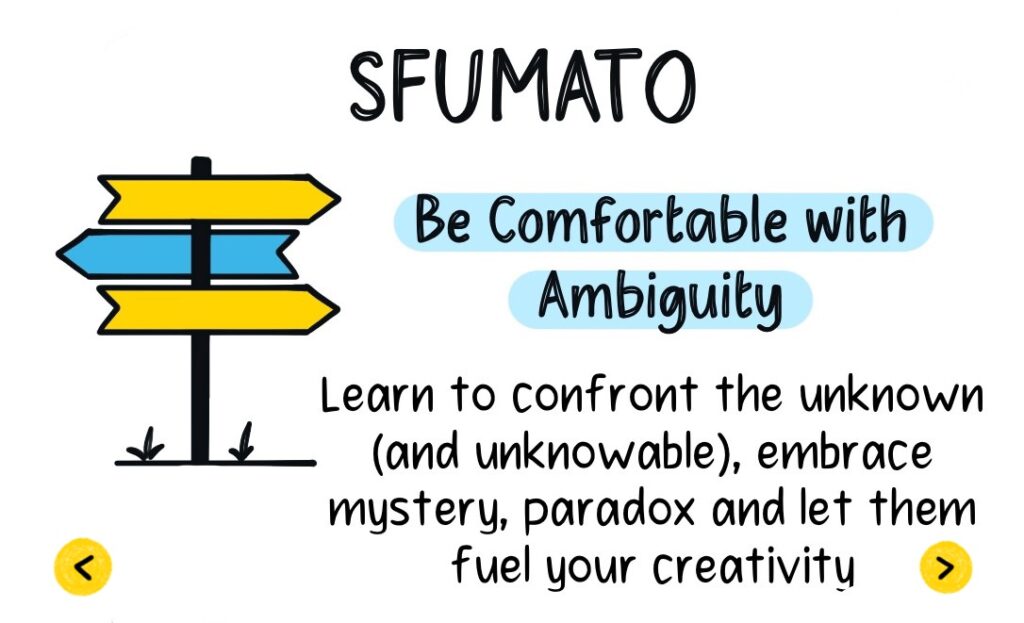
Thriving in an uncertain world requires us to leap into the unknown and find our way through ambiguous and often paradoxical situations. Sfumato is about being comfortable with ambiguity and contradictions. It is about embracing the yin and the yang and find a balance between these extremes in a way that fuels our creativity. This is a prerequisite for solving any innovative problem.
5. Arte/Scienza (Develop Balance between Logical and Creative Thinking)
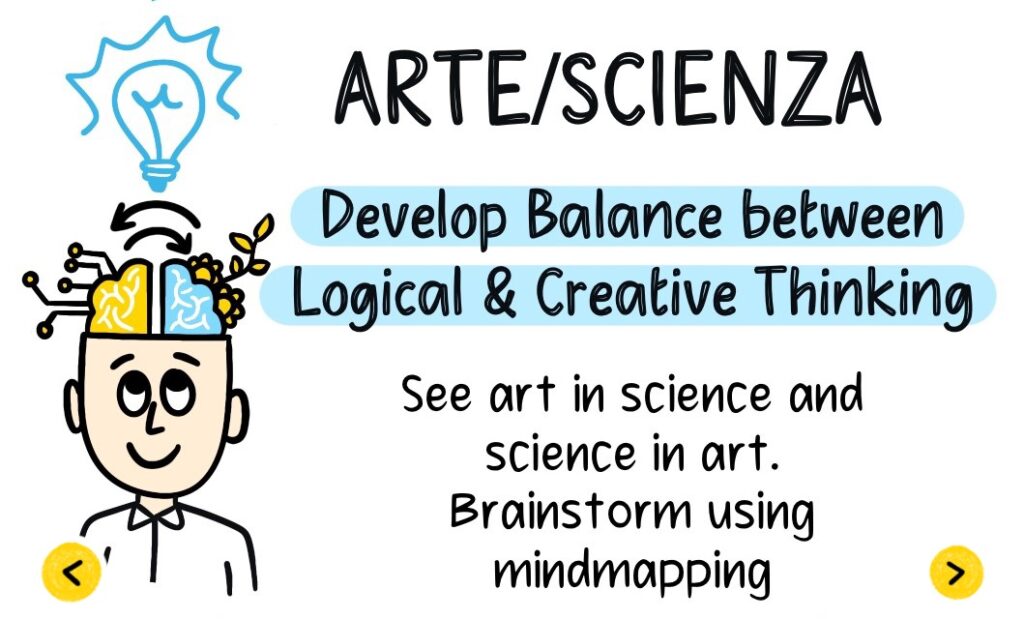
Da Vinci’s work is a classic fusion of art and science. A painter uses a lot of science to paint that masterpiece and the way scientists approach their work can be artful. Artistry is about bringing positive change in the world. For that, we need an artistic expression and scientific inquiry to unlock new possibilities.
6. Corporalità (Poise between Body and Mind)
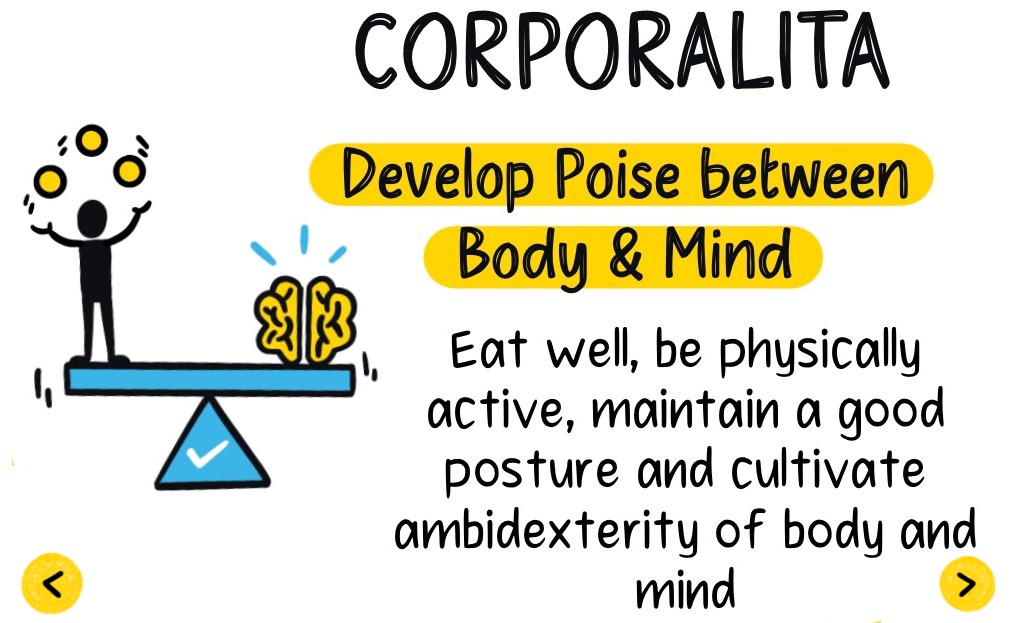
A healthy mind lives in a healthy body. Physical well being is at the center of our all our endeavors. Physical well being fosters creativity. I often find my best ideas while walking, working out or cycling. I have often experienced the correlation between physical well being and mental clarity
7. Connessione (Maintaining a Big Picture Perspective)
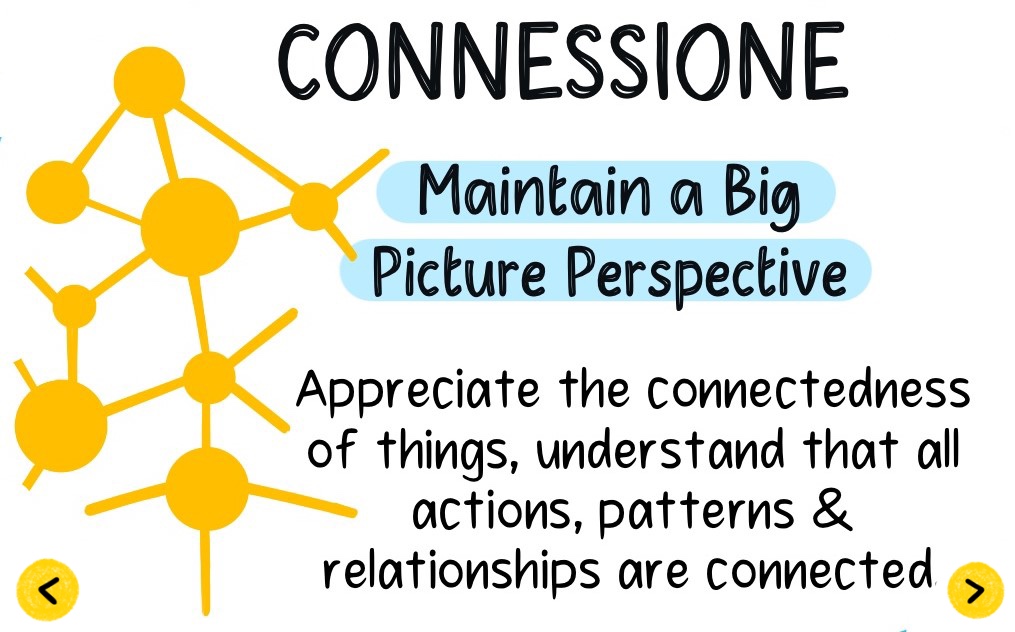
Da Vinci studied the interconnectedness of all things and worked to understand the relationship between diverse and discrete phenomena. To develop a holistic view (and think in systems), we need to understand that everything is connected. Connessione means connection – and fostering connections between people, disciplines and ideas enables us to build a holistic view of the world.
How to Think Like Leonardo Da Vinci is not just an exploration of Da Vinci’s mindset but also offers a window to his methods and some of his work. What I loved about the book each time I read it was Michael Gelb’s practical tools to cultivate creativity and expand our intellectual horizons.
If you ever feel stuck or uninspired, pick up this book and I am sure you will find ideas to reinvigorate your creativity and innovative thinking.
It is really appreciated foe your kind sharing of such a useful contact.
Regards.
Thank you. I, too, was very influenced by this book. The principles immediately resonated for me and I strive to live and learn by them. Excellent summary.